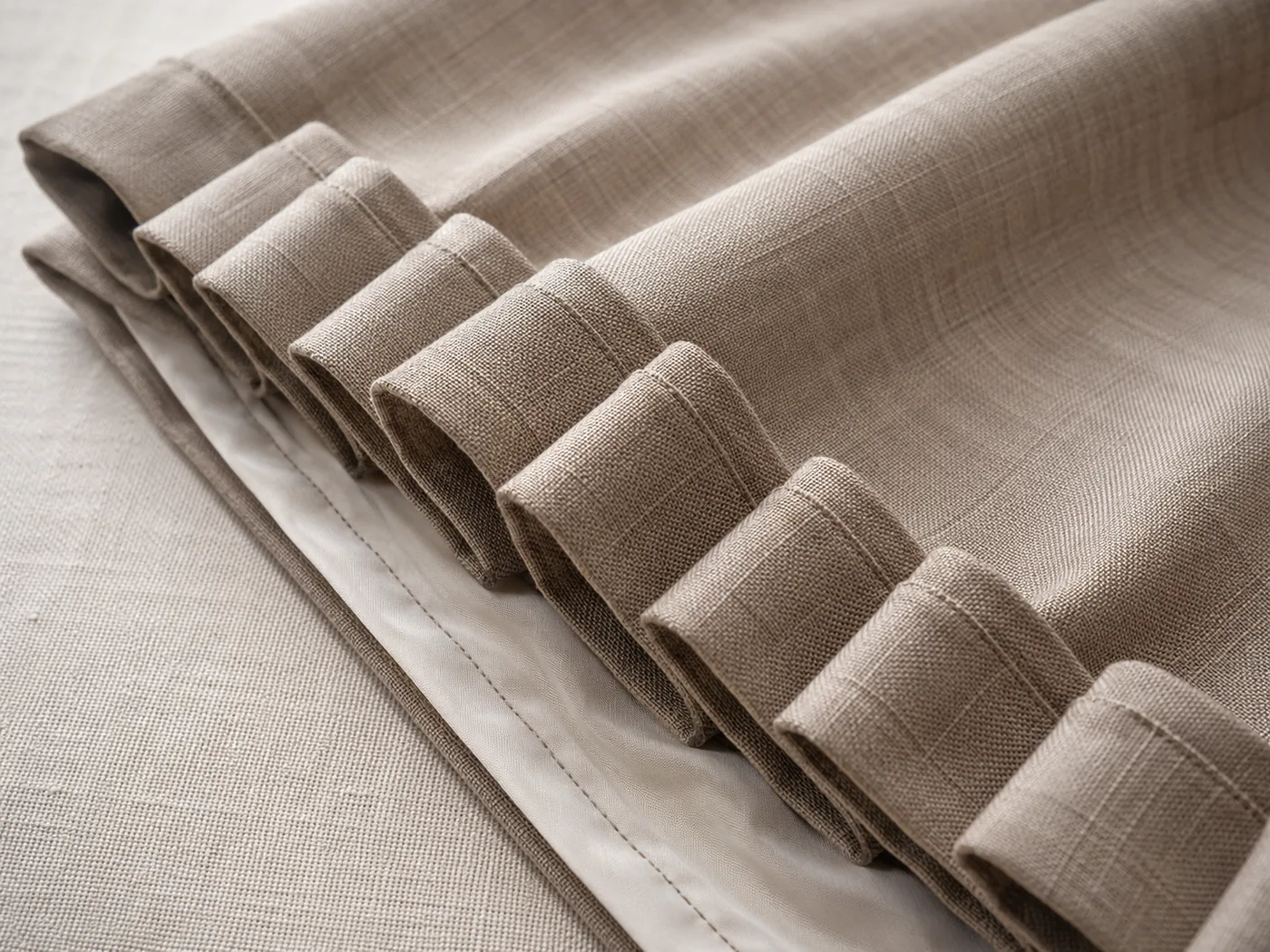
Lining is not simply a hidden layer. It changes how a custom treatment looks, hangs, controls light and interacts with the face fabric.
What Standard Lining Does
Standard lining gives the back of a treatment a more finished appearance and separates the decorative face fabric from the window side of the treatment. It can also improve drape and provide an additional layer between the face fabric and sunlight.
The exact lining specification should be selected according to the face fabric, desired appearance and project conditions.
When Blackout Lining Makes Sense
Blackout lining is used when increased room darkening is an important part of the treatment. Bedrooms, media rooms and hospitality-style sleeping spaces are common examples.
Blackout construction can change the hand and weight of a treatment. It can also make pinholes or light leakage at seams more noticeable in certain applications, so the finished expectation should be discussed rather than assuming “blackout” means absolute darkness in every installation.
What Interlining Changes
Interlining adds another layer between the face fabric and lining. It can add body, softness and visual richness, particularly with fabrics that benefit from a fuller hand.
It also adds weight and thickness. That affects sewing, pleating, hardware load and how the finished panel stacks when open.
Choosing Between Them
Think about the visual result first. A crisp contemporary treatment may call for a different construction than a soft, full traditional panel. Then consider room-darkening requirements, face-fabric characteristics, hardware and overall treatment weight.
There is no single “best” lining specification for every custom drapery project.
Questions to Ask Before Specifying
- How much light control is expected?
- Does the face fabric need additional body?
- Will added thickness affect the heading or stack?
- Is the treatment functional or stationary?
- Can the selected hardware comfortably support the finished weight?
- Is appearance from the exterior important?