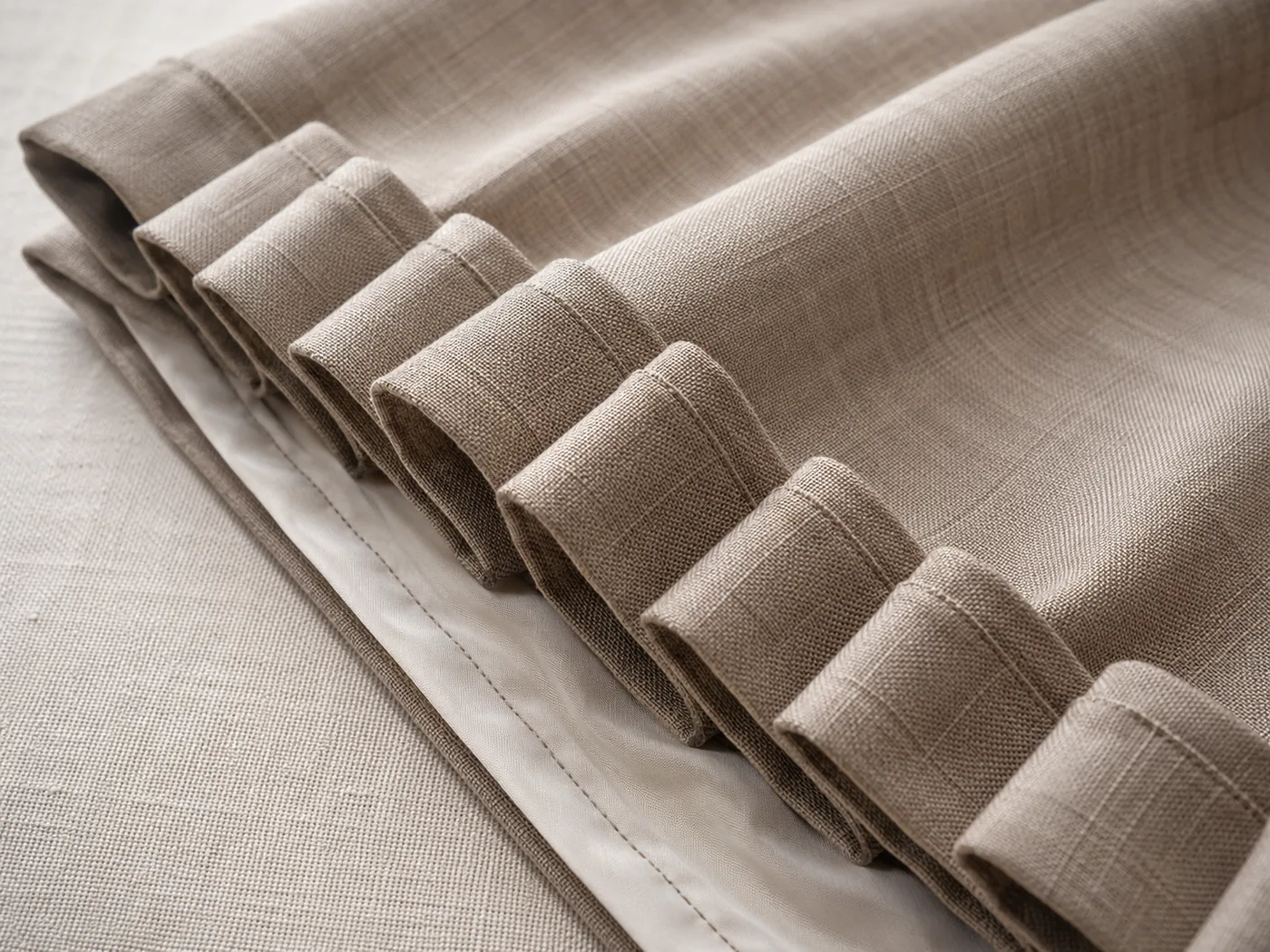
Pattern repeat is one of the main reasons a custom treatment can require more fabric than a simple width-by-length estimate suggests.
What Pattern Repeat Means
A patterned fabric may repeat vertically, horizontally, or in both directions. The vertical repeat is the distance before the design repeats up the length of the fabric. The horizontal repeat describes how the motif repeats across the fabric width.
Those dimensions matter because adjacent widths of fabric usually need to be cut so the pattern aligns when they are joined.
Why Repeat Can Increase Yardage
For a solid fabric, cut lengths can often be based closely on the treatment length plus the allowances required for construction. Patterned fabric may require each cut to advance to the next matching point in the repeat.
The larger the repeat and the more cut lengths required, the more additional material may be needed to keep motifs aligned.
Centered Motifs and Placement Requests
Some designs look best when a prominent motif is centered on each panel or positioned consistently relative to a pleat, hem or shade fold. That is a design decision rather than automatic pattern matching.
If motif placement matters, communicate it before cutting. A photograph of the fabric with the desired motif identified can be more useful than a general note such as “center pattern.”
Railroaded Fabric
Railroading turns the fabric so its width runs horizontally across the treatment. It can reduce seams in some applications, particularly when using wide goods, but only when the fabric construction, pattern direction and treatment design make railroading appropriate.
Do not assume a fabric can be railroaded simply because the physical width is sufficient.
Before Ordering Fabric
- Confirm fabric width.
- Record vertical and horizontal repeat.
- Confirm pattern direction.
- Identify whether exact motif placement is required.
- Allow for matching, construction and possible flaws.
- Have final yardage reviewed when the fabric is expensive, limited or difficult to replace.