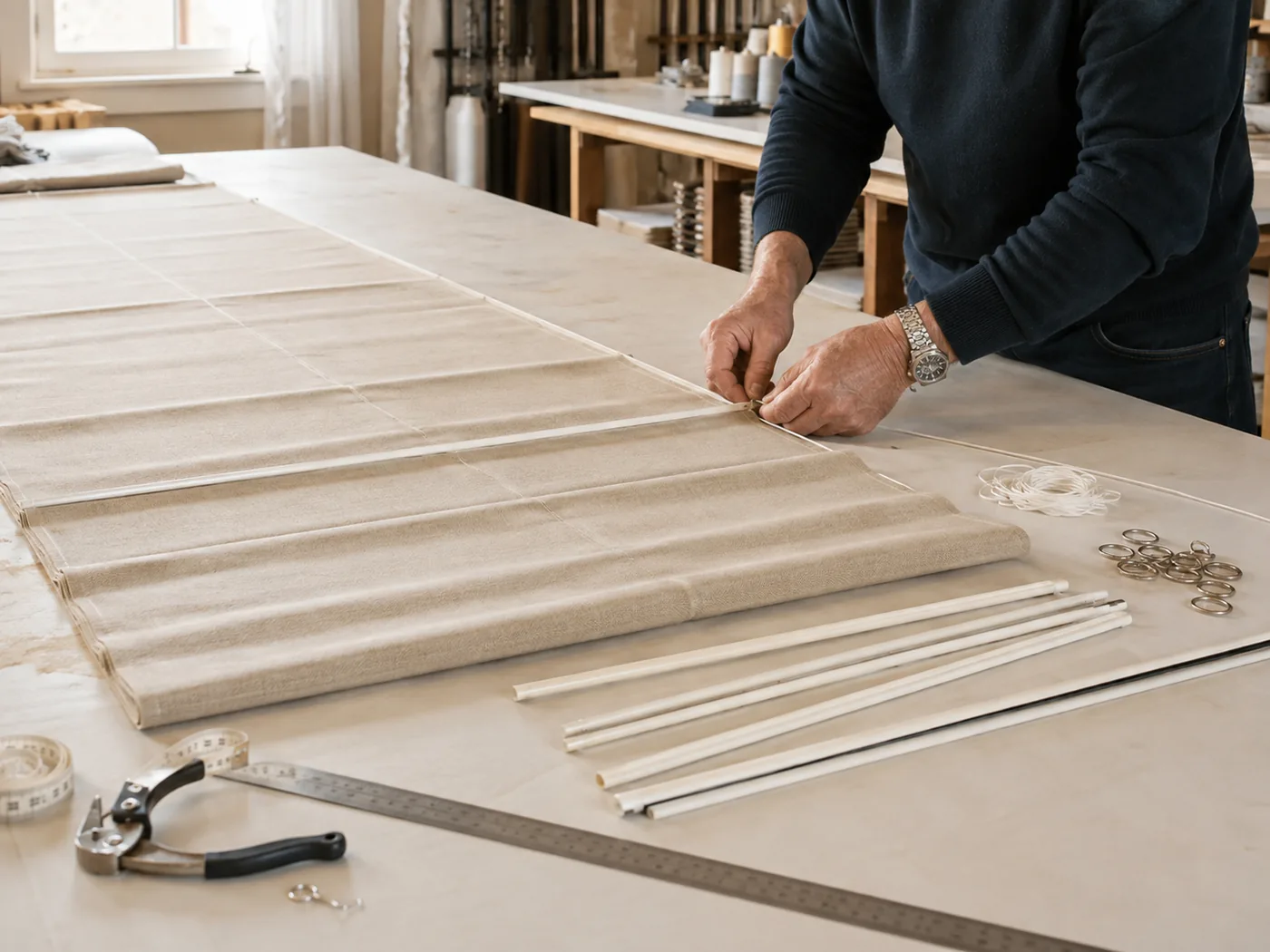
A Roman shade looks simple when it is finished, but the specification has to coordinate the opening, fabric, lining, style and operating conditions.
Start With Mount Type
Decide whether the shade will be installed inside the opening or outside it. That choice affects finished dimensions, light gaps, clearance and how much of the window trim remains visible.
For inside mounts, measure the opening at multiple points because real window openings can vary. The available depth also matters when the operating system and shade need to fit inside the recess.
Choose the Shade Style
Flat Roman shades produce a cleaner plane of fabric when lowered. Relaxed styles introduce a softer shape at the bottom. Other styles can create folds or decorative structure that change both appearance and fabrication.
The fabric should be evaluated with the shade style because soft, stiff, patterned and directional materials do not all behave the same way.
Specify Lining and Light Control
Standard lining and room-darkening options change the appearance and performance of the shade. Blackout requirements should be considered together with the installation because light can still enter around the perimeter of many inside-mounted shades.
Plan Pattern Placement
Large motifs, stripes and plaids can make pattern placement much more visible on a Roman shade than on a drapery panel because the shade presents a relatively flat field of fabric when lowered.
If a motif must be centered or begin at a particular location, call that out before cutting.
Roman Shade Specification Checklist
- Inside or outside mount
- Finished width and length
- Available mounting depth
- Shade style
- Lining or blackout requirement
- Fabric width and repeat
- Pattern placement instructions
- Control or operating requirements
- Photos of the opening and surrounding trim